
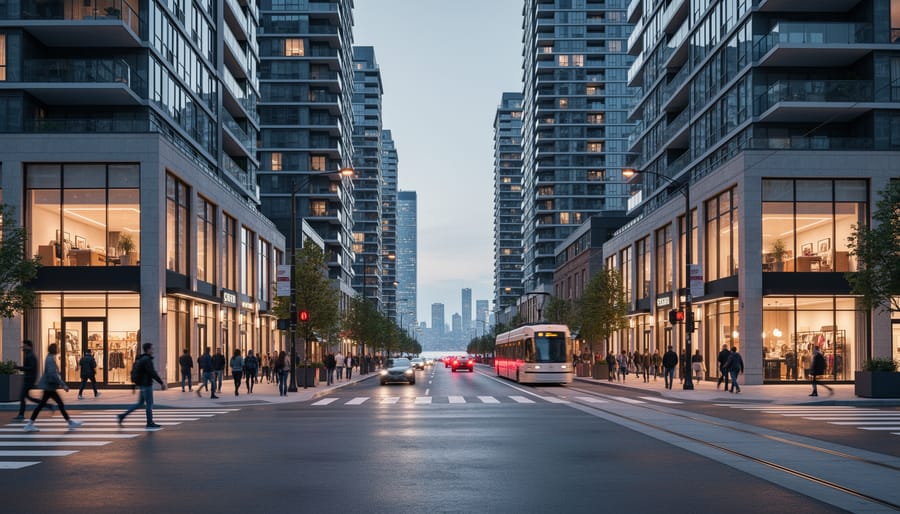
Downtown Toronto properties range from sleek glass condos starting around $600,000 to heritage lofts and pre-construction units that promise modern amenities in the heart of Canada’s financial capital. If you’re hunting for a place between Bloor and the waterfront, you’re looking at dense competition, premium prices per square foot, and a lifestyle trade-off that swaps backyard space for walkability and transit access.
The appeal is obvious. You can roll out of bed and reach your King Street office in ten minutes, grab world-class dim sum in Chinatown on a whim, or catch a Raptors game without planning your parking strategy three days in advance. Downtown living cuts commute time to near zero and plants you in the middle of Toronto’s best restaurants, festivals, and nightlife.
But it’s not all floor-to-ceiling windows and rooftop terraces. Maintenance fees hover around $0.65 to $0.85 per square foot monthly, street noise is a constant companion, and parking spots routinely sell for $50,000 on top of your unit price. You’ll sacrifice storage, outdoor space, and quiet Saturday mornings for proximity and convenience.
This guide breaks down what’s actually available in the core right now, what you’ll pay (and keep paying), and whether downtown ownership aligns with how you live. Whether you’re a first-time buyer drawn to condo life or a growing family weighing urban density against suburban sprawl, you’ll walk away knowing if a downtown address makes sense for your budget and daily routine in 2026.
The Downtown Toronto Property Landscape in 2026
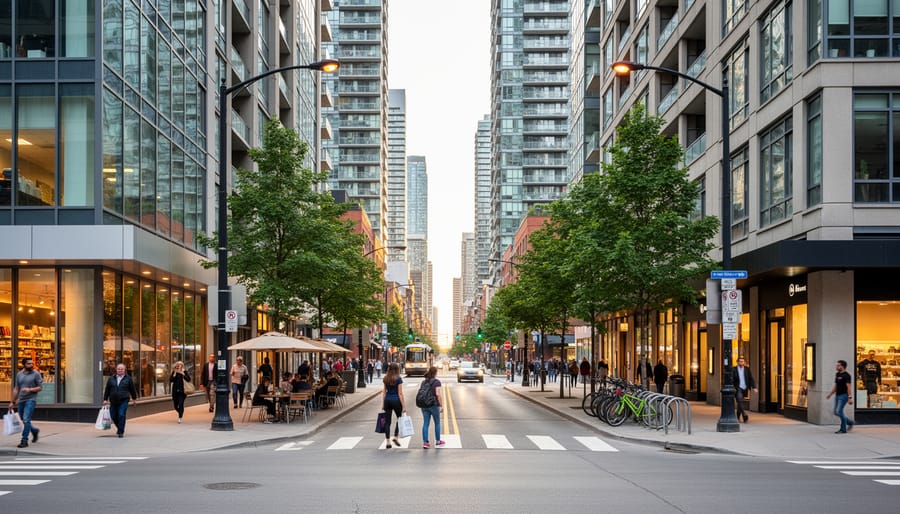
Downtown Toronto’s real estate scene has matured into something genuinely interesting. Gone are the days when “downtown property” automatically meant a glass-and-steel condo tower. Today’s core offers surprising variety, though you’ll still find condos dominate the landscape, they represent about 75% of available properties between Bloor and the waterfront.
What’s changed? The property mix has gotten smarter. You’ll spot converted heritage lofts in King West with exposed brick and 14-foot ceilings, boutique condo buildings in St. Lawrence Market with fewer than 50 units, and yes, even the occasional freehold townhouse tucked into neighborhoods like Corktown or the Garden District. These townhouses are rare finds and typically command premium prices, but they exist for buyers who won’t compromise on outdoor space.
The condo market itself has evolved. Newer buildings pack in amenities that older stock can’t match, coworking spaces, pet spas, rooftop terraces that actually get used. But don’t write off pre-2010 buildings. They often sit on larger lots with better layouts and lower maintenance fees, trade-offs that matter when you’re living there day to day.
What makes downtown distinct from neighborhoods like Liberty Village or Yonge and Eglinton? True walkability. Not “you can walk if you really want to” walkability, but “I haven’t needed my car in three weeks” walkability. Your office, groceries, gym, and weekend plans exist within a 15-minute radius. That density of services and employment remains the core’s biggest competitive advantage.
The market has cooled from its 2021 frenzy but stabilized rather than crashed. Properties move at a steadier pace now, giving buyers actual time to think instead of panic-bidding. Inventory fluctuates, but there’s usually something decent available if you’re patient and know what you want.
What You Actually Get for Your Investment

Let’s be straight: downtown Toronto properties rarely offer sprawling square footage. What you’re buying isn’t measured purely in floor space, it’s about access, convenience, and a lifestyle that eliminates hours of commuting hell.
A typical one-bedroom condo downtown runs 500-650 square feet. Two-bedrooms? You’re looking at 700-900 square feet for most units, though older buildings sometimes surprise you with 1,000-square-foot layouts that feel like mansions by comparison. Yeah, it’s cozy. But here’s what you actually get for accepting that trade-off: you’re steps from work, restaurants worth bragging about, and transit that actually shows up on time.
Building amenities have become the great equalizer. Most newer developments include 24-hour concierge service, fitness centres that rival your gym membership, party rooms for when your apartment can’t handle twelve friends, and rooftop terraces where you’ll spend more summer evenings than you expect. Some buildings throw in guest suites (hello, visiting parents who won’t cramp your space), bike storage, and even pet spas. These aren’t just marketing fluff, residents actually use them.
| Price Range | Typical Size | Standard Amenities | Location Quality |
|---|---|---|---|
| Under $600K | 400-550 sq ft | Basic gym, party room | Edge of core, near transit |
| $600K-$900K | 550-750 sq ft | Full gym, concierge, terrace | Central core, walkable to everything |
| $900K-$1.5M | 750-1,100 sq ft | Premium gym, multiple terraces, guest suites | Prime blocks, iconic addresses |
| $1.5M+ | 1,100+ sq ft | Luxury concierge, pools, private dining | Waterfront, Financial District penthouses |
The real value shows up in your weekly routine. Forget owning a car (and the $200-300 monthly parking spot). Your grocery store is downstairs, your office is a ten-minute walk, and that concert you want to catch? You’re home twenty minutes after it ends. You’re also buying into buildings with security, maintenance staff who fix things without you calling your landlord seventeen times, and neighbours who get the downtown pace.
Older buildings, particularly along Yonge Street or in the Garden District, offer bigger units and lower maintenance fees, but you sacrifice the fancy amenity package. Newer glass towers, especially around the Waterfront and CityPlace, flip that equation: smaller footprints, higher fees, but amenities that make your unit feel bigger than it is.
The Real Perks of Living Downtown (Beyond the Marketing Hype)
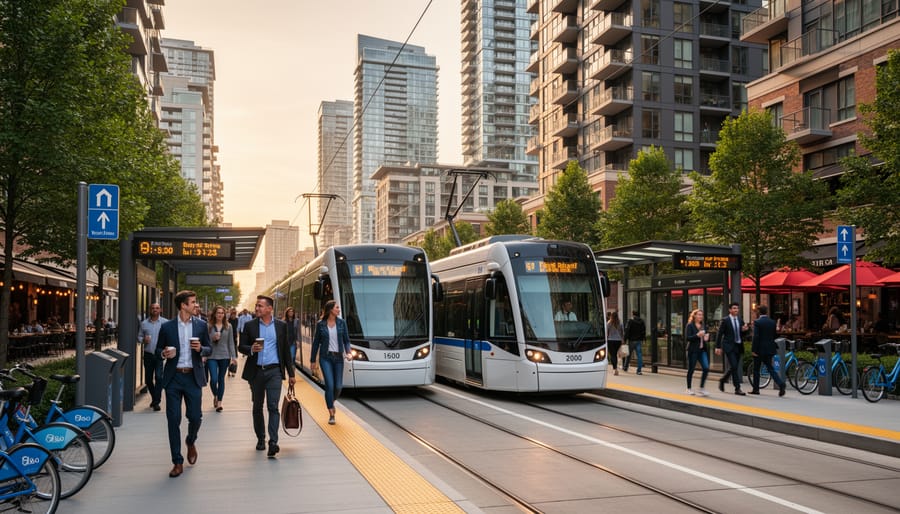
Living downtown means everything you need exists within a 15-minute walk. Forget the hype about “vibrant urban living”, the real advantage is getting groceries, hitting the gym, meeting friends for coffee, and making it home before your ice cream melts. You’re not choosing between convenience and lifestyle; you’re getting both.
Transit access genuinely changes your relationship with the city. When you’re steps from multiple subway lines, streetcar routes, and GO Transit connections, spontaneity becomes possible. Catching a concert at Massey Hall on a Tuesday? Done. Meeting colleagues at Liberty Village without checking traffic? Easy. You’ll stop planning your life around commute times and start saying yes to opportunities that felt too complicated before.
The cultural scene isn’t just nearby, it’s woven into your routine. You’ll grab exhibitions at the AGO between meetings, catch film festivals at TIFF Bell Lightbox on rainy Sundays, and discover that waterfront events become your default weekend plans rather than special occasions. This proximity transforms culture from something you occasionally consume into something that shapes your everyday rhythm.
The dining reality beats any food court fantasy. Within your neighborhood, you’ll find hole-in-the-wall ramen spots, Portuguese bakeries unchanged since 1976, Thai restaurants run by actual Thai grandmothers, and experimental tasting menus from chefs who just earned their first Michelin attention. You’ll develop opinions about which banh mi shop does it better and where to get proper espresso at 6 a.m.
Career advantages go beyond shorter commutes. Downtown means networking drinks don’t require coordinating rides home. Coffee meetings happen in actual coffee shops, not conference rooms. When recruiters reach out, you’re already in the neighborhood where most interviews take place. Your LinkedIn location signals availability and ambition in ways suburban addresses simply don’t.
The surprise perk most residents mention? Community density creates unexpected friendships. Your dog-walking route introduces you to neighbors. Your local bar recognizes your order. You’ll see familiar faces at the gym, the market, the coffee shop. Even events like Labour Day Toronto celebrations feel more personal when your whole neighborhood participates together. Downtown doesn’t isolate you in glass towers, it connects you to thousands of people living the same concentrated urban experience.
The Challenges You Need to Know About
Living downtown sounds like a dream until you’re lying awake at 2 AM listening to sirens, garbage trucks, and your neighbor’s impromptu karaoke session. Let’s talk about what actually bugs people about downtown properties, and how you can work around it or decide it’s a dealbreaker.
Noise is the big one. Street-level units near King or Queen catch everything: delivery trucks at dawn, bar crowds until 3 AM, construction starting at 7. Upper floors help, but you’ll still hear the city hum. Double-glazed windows and units facing courtyards or side streets make a huge difference. Visit properties at different times, Saturday morning, Thursday night, weekday rush hour, to understand what you’re signing up for.
Space shrinks fast downtown. That 650-square-foot one-bedroom feels roomy until you try fitting a dining table and a home office. Storage disappears. Closets are laughably small. You’ll get creative with furniture or ruthlessly declutter, because downtown living forces you to edit your stuff. Some people love the minimalism; others feel cramped within six months.
Parking adds $50,000 to $75,000 to your purchase price, and many newer buildings offer only one spot per unit, or none. Street parking is a fantasy. If you need two cars, you’re paying for off-site monthly parking that runs $250 to $400. Lots of downtowners ditch the car entirely and rely on transit, bikes, and the occasional Uber.
Maintenance fees run higher downtown because amenities cost money to maintain. That rooftop terrace, 24-hour concierge, and gym don’t fund themselves. Expect $0.65 to $0.85 per square foot monthly, sometimes more in newer glass towers. Read the status certificate carefully, special assessments happen when reserve funds run low.
During property tours, watch for these red flags:
- Windows facing major intersections or bars (check Google Maps for nearby late-night spots)
- Units directly above loading docks or garage entrances
- Buildings with ongoing or planned construction next door
- Elevator banks near your unit (constant noise and foot traffic)
- South-facing glass walls without good blinds (summer heat becomes unbearable)
Construction never stops downtown. Between condo towers going up, infrastructure projects, and streetcar track work, you’ll hear jackhammering somewhere nearby. It’s part of the deal. The upside? Your neighborhood keeps improving, and property values tend to rise with development.
Crowds are constant. Sidewalks pack during rush hour, grocery stores get slammed after work, and your favorite brunch spot has 45-minute waits on weekends. You learn the rhythms, shop Tuesday mornings, hit restaurants early or late, find hidden gem spots the tourists haven’t discovered yet.
None of this should scare you off if downtown living genuinely fits your lifestyle. But go in with eyes open, because these challenges don’t magically disappear once you move in.
Who Thrives in Downtown Properties
Downtown living isn’t for everyone, and that’s perfectly fine. But if you fall into certain lifestyle categories, you’ll probably wonder why you didn’t make the move sooner.
Young professionals climbing the career ladder find downtown properties almost custom-made for their lives. Your commute shrinks to a fifteen-minute walk or a quick subway ride. Those extra hours you’re not stuck in traffic? They’re yours for morning workouts, after-work drinks with colleagues, or actually having a social life. When you can walk to client meetings and grab lunch without planning an expedition, your whole work-life dynamic shifts.
Empty nesters are increasingly ditching suburban houses for downtown condos, and they’re loving it. No more yard maintenance, snow shoveling, or rattling around in four empty bedrooms. Instead, you get walkable access to theaters, galleries, and restaurants you’ve been meaning to try for years. The building amenities replace the home gym gathering dust in your basement. You’re trading square footage for experiences, and most empty nesters find that trade wildly worth it.
Couples without kids thrive downtown for obvious reasons. You want spontaneity, not soccer practice schedules. Your ideal Toronto long weekend involves brunch, Electric Island and late-night tacos, not driving to big-box stores. Downtown properties give you proximity to everything that makes Toronto exciting.
Creative professionals and freelancers also flourish here. Coworking spaces, coffee shops with decent wifi, and a community of like-minded people create the ecosystem that fuels creative work. When your office is wherever your laptop is, living somewhere inspiring matters more than square footage.
If you value experiences over space, connection over isolation, and walking over driving, downtown properties align with how you actually want to live.
Smart Buying Strategies for Downtown Toronto
Buying downtown Toronto real estate requires a different playbook than purchasing in the suburbs. The market moves faster, competition runs hotter, and knowing the unwritten rules can save you thousands.
Get an agent who actually works downtown. Not someone who handles the entire GTA but an agent whose daily business happens between the waterfront and Bloor. They’ll know which buildings have upcoming special assessments, which condo boards are well-run nightmares versus functional ones, and which streets get surprisingly quiet despite being in the core. They also have relationships with other downtown agents, which matters when you’re competing against five other offers.
Do your condo corporation homework obsessively. Request the status certificate and actually read it, or hire someone who will. Look at the reserve fund balance, healthy buildings have reserves equivalent to at least 25% of their annual operating budget. Check for upcoming major projects like elevator modernization or facade repairs that could trigger special assessments. Review the meeting minutes from the past year for recurring complaints or board dysfunction. A $50,000 lower purchase price means nothing if you’re hit with a $15,000 special assessment six months after moving in.
Timing matters, but not how you think. Forget trying to time interest rate drops or market corrections perfectly. Focus instead on seasonal patterns, late November through February typically sees less competition and more negotiating room, while spring brings bidding wars. If you find the right property in July, buy it. Waiting for perfect market conditions while losing your ideal unit is the classic downtown buyer mistake.
Think resale from day one. Properties near major transit stations, in buildings with good management, and with layouts that appeal broadly always move faster. One-bedroom-plus-den units typically have stronger resale than pure one-bedrooms. South-facing units command premiums. Buildings with useful amenities (not just impressive-looking ones) hold value better. If you’re buying something quirky or ultra-specific to your taste, make sure you can afford to wait longer when selling.
Negotiate beyond price. In hot markets, you might not get the seller down much, but you can often negotiate flexible closing dates, included parking or locker, or have them cover your first year of maintenance fees. Some sellers care more about certainty and clean deals than squeezing every dollar out. Know what actually provides you value beyond a lower purchase price, especially since there are plenty of things to do downtown once you’re settled in.
Renting vs. Buying Downtown: Making the Right Call
The rent-or-buy question downtown isn’t just about monthly costs. It’s about where you are in life and where you’re headed.
If your career might take you elsewhere in two years, or you’re still figuring out which neighborhood feels like home, renting makes practical sense. You get to test-drive downtown living without the commitment of a mortgage, land transfer tax, and closing costs. Renters also dodge condo maintenance fees and special assessments when the building needs a new elevator or roof repairs.
Buying becomes compelling when you’re planning to stick around for at least five years. That’s roughly the break-even point where your equity buildup and potential appreciation outweigh the transaction costs of purchasing. Downtown condos can appreciate well because supply is constrained and demand stays strong, but you need time for that math to work in your favour.
Renting Downtown
- Flexibility to move without selling complications or costs
- No maintenance fees, property taxes, or surprise building assessments
- Easier to budget with predictable monthly housing costs
- Chance to explore different buildings and blocks before committing
Buying Downtown
- Building equity instead of paying someone else’s mortgage
- Freedom to renovate and personalize your space
- Locked-in housing costs as rents continue climbing
- Potential appreciation in a supply-constrained market
- Pride of ownership and long-term stability
Your financial situation matters more than market timing. Can you comfortably handle a 20 percent down payment without draining your emergency fund? Will the monthly mortgage, maintenance fees, property tax, and insurance still leave room in your budget for the lifestyle that drew you downtown in the first place?
Career stage plays in too. If you’re climbing fast in your field and expect significant income growth, buying now locks in your housing cost while your earnings rise. If you’re between gigs or contemplating a career shift, renting preserves your flexibility and capital.
Think about your actual downtown routine. If you’re out most nights enjoying restaurants and events, paying a premium to own might not align with how you actually live. But if you envision hosting friends in your own space and building a home base in the core, ownership delivers different rewards than rent ever will.
Downtown Toronto properties aren’t for everyone, and that’s perfectly fine. But if you’ve made it this far, you’re probably the kind of person who gets genuinely excited about stepping out your door and being in the middle of everything that matters.
The investment makes sense when you consider what you’re actually buying: not just square footage, but time saved on commuting, spontaneous Tuesday night concerts, morning coffee runs that don’t require a car, and the energy that comes from living somewhere that’s constantly evolving. Yes, you’ll pay more per square foot. Yes, you’ll hear sirens. Yes, your friends in the suburbs will have bigger backyards.
But you’ll also have a life that’s uniquely yours, shaped by a neighborhood that rewards curiosity and values convenience. The downtown core isn’t slowing down, and neither are the opportunities it offers for work, culture, and connection.
If the lifestyle fits your priorities and the numbers work for your situation, don’t second-guess yourself. Downtown living is an experience worth investing in, and 2026 is as good a time as any to claim your spot in Toronto’s beating heart.